
New Review: Managing Vulvovaginal Candidiasis
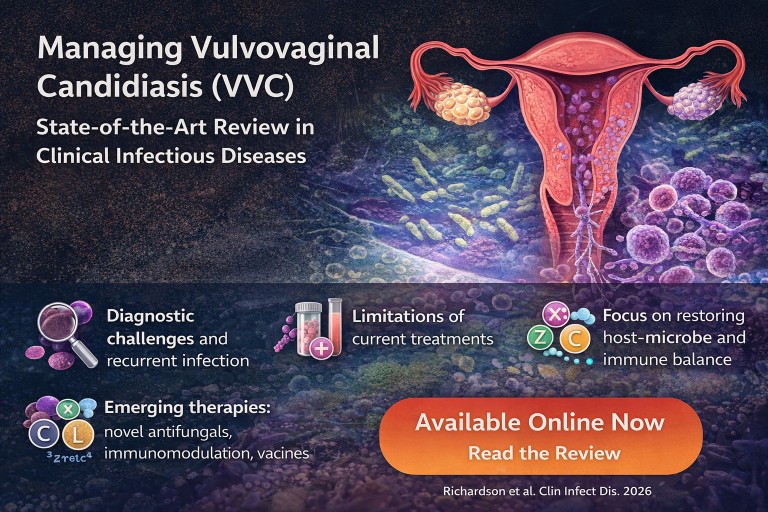
A new international review led by experts in medical mycology provides an updated overview of the pathogenesis, diagnosis and management of vulvovaginal candidiasis (VVC) and its recurrent form, recurrent vulvovaginal candidiasis (RVVC). The article synthesises current knowledge on host–pathogen interactions, microbiome dynamics and emerging therapeutic strategies, and presents a practical clinical decision-making algorithm for the management of patients presenting with vulvovaginal symptoms.
VVC remains one of the most common fungal infections globally. It is estimated that approximately 138 million women are affected annually, with up to 75% of women experiencing at least one episode during their lifetime and 5–10% developing recurrent disease.
Current understanding of VVC pathogenesis
The review highlights the complex interaction between Candida species, host immune responses and the vaginal microbiome. Although Candida albicans remains the predominant causative organism, infections caused by non-albicans species are increasingly recognised, particularly in patients with prior antifungal exposure or metabolic risk factors.
Key mechanisms discussed include:
- the role of fungal virulence factors such as candidalysin and secreted aspartyl proteinases
- neutrophil recruitment and dysfunction within the vaginal mucosal environment
- microbiome dynamics and the influence of lactobacilli on fungal colonisation
- genetic susceptibility and dysregulated immune responses in recurrent disease
These findings emphasise that symptomatic disease is not simply a consequence of fungal presence, but rather reflects a complex host–microbe interaction within a highly specialised mucosal environment.
Diagnostic challenges
Diagnosis of vulvovaginal candidiasis remains challenging due to the high prevalence of asymptomatic colonisation. Laboratory detection of Candida does not necessarily confirm causality, particularly when highly sensitive diagnostic modalities such as PCR are used.
The review therefore stresses the importance of integrating:
- clinical presentation
- microscopy and culture results
- treatment response
- consideration of alternative vulvovaginal diagnoses
Careful interpretation of laboratory findings is essential to avoid overdiagnosis and unnecessary antifungal therapy.
Clinical decision-making algorithm
A key feature of the paper is a structured clinical decision-making algorithm designed to guide clinicians managing patients with vulvovaginal symptoms and suspected recurrent infection.
The algorithm highlights several critical steps:
- clinical assessment of symptoms and examination findings
- microbiological confirmation where appropriate
- evaluation of treatment response
- identification and management of recurrent disease
In patients with RVVC, longer-term suppressive antifungal therapy may be required alongside evaluation of underlying risk factors and comorbidities.
This structured approach provides a useful framework for clinicians navigating the diagnostic complexity of vulvovaginal symptoms and recurrent candidiasis.
Emerging therapeutic strategies
The review also discusses several emerging treatment strategies that may improve management of recurrent infection. These include:
- novel antifungal agents such as ibrexafungerp
- tetrazole antifungals including oteseconazole
- immune-modulating approaches targeting fungal virulence pathways
- experimental vaccine strategies aimed at preventing recurrent infection
In addition, recent research into fungal nutrient acquisition mechanisms, including zinc scavenging via Pra1, highlights potential therapeutic targets for modulating host inflammatory responses during infection.
Implications for medical mycology
Vulvovaginal candidiasis provides a valuable model for studying fungal–host interactions at mucosal surfaces. Insights into immune dysregulation, microbial ecology and antifungal resistance emerging from this field may inform broader research across fungal diseases.
As understanding of mucosal immunology and fungal pathogenesis continues to evolve, integrated approaches combining microbiology, immunology and clinical medicine will be critical for improving outcomes for patients with recurrent fungal disease.
Further reading
Rautemaa-Richardson R, Sobel JD, Stone N, De Seta F, Cassone A, Vieira-Baptista P, Comar M, Warris A, Roselletti E. State-of-the-Art Review: Managing Vulvovaginal Candidiasis. Clin Infect Dis. 2026 Mar 17;82(3):371-382. doi: 10.1093/cid/ciaf673. PMID: 41839452.